Designed to supply uniform and accurate heating, the water bath uses in lab is noted for its rugged build and simple controls. Temperature is variable in small steps and maintained constant through a sophisticated microprocessor-operated system. The stainless-steel enclosure resists corrosion and distributes heat evenly. The water bath uses in lab is equipped with automatic temperature recovery and low-water protection for added security. With its sleek exterior, noiseless running, and power conservation, it fits into any laboratory setup. The water bath uses in lab makes certain that there is consistent performance during critical experimental procedures.
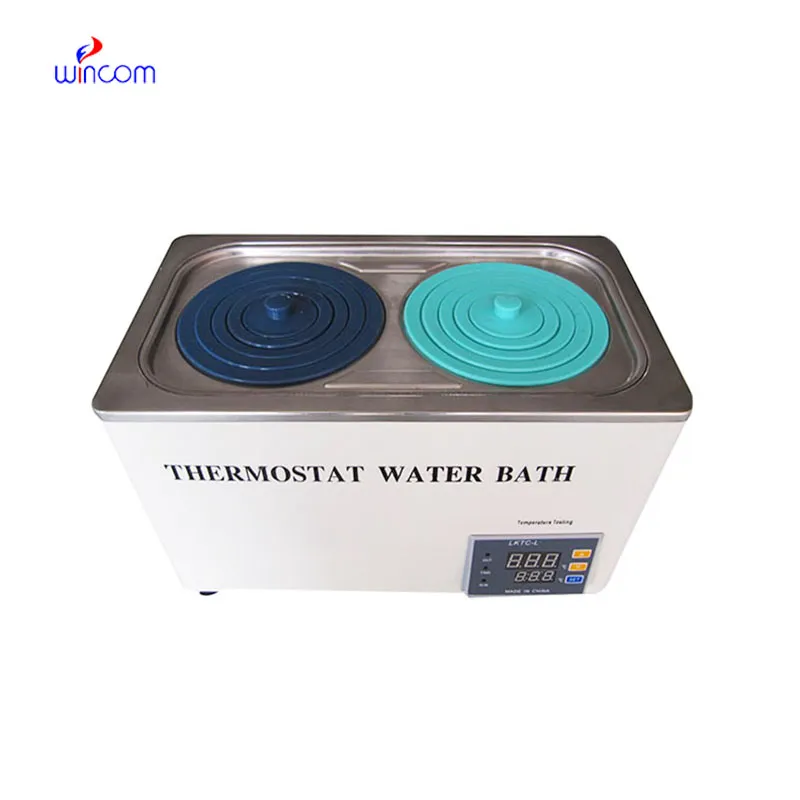
Both in commercial and school settings, the water bath uses in lab provides stable heat for experiments that necessitate temperature-driven conditions. It is used in processes such as protein digestion, bacterial culture, and heating of reagents. The water bath uses in lab is also crucial in environmental analysis where accuracy in temperature control of incubating samples is needed. The water bath uses in lab' reliability supports laboratories in conducting standard experiments as well as complex research studies. The water bath uses in lab' stable performance ensures reproducibility and reliability, boosting laboratory results' credibility across various fields.

In the near future, the water bath uses in lab will consist of intelligent systems capable of automating laboratory processes. Predictive maintenance features will alert users before failure, conserving time. Cloud connectivity will ensure seamless data sharing between research labs, promoting collaboration and quality control. The water bath uses in lab will also consist of adaptive temperature algorithms that respond dynamically to sample conditions. With continued focus on sustainability and automation, it will redefine laboratory heating equipment for a digital precision age.

Routine maintenance procedures need to be performed by the users to make the water bath uses in lab function properly. Clean the tank every week to remove mineral buildup or chemical residue. Scaling and corrosion are prevented through the use of distilled water. Dry parts completely after cleaning before filling up. The heating coil and temperature sensor should be checked for build-up or debris. Electrical components should not be submerged in water when cleaning. Proper routine maintenance makes the water bath uses in lab accurate, safe, and efficient to utilize over a long period of time.
The water bath uses in lab is a heat-controlled device from which researchers are able to maintain specimens at specified temperatures. The efficient heat transfer process of the device allows for uniform temperature throughout the chamber. In life science, chemistry, and food testing facilities, the water bath uses in lab is generally used in the processes such as sample incubation and reagent melting. With a strong focus on precision and safety, it has top-of-the-line thermal control to offer stable performance in a variety of different research settings.
Q: What temperature range can a laboratory water bath typically achieve? A: Most laboratory water baths operate between ambient temperature and approximately 100°C, allowing precise control for a variety of experiments. Q: How does a water bath ensure even heating across samples? A: The circulation of water, either by convection or a built-in stirrer, ensures uniform temperature distribution throughout the chamber. Q: Why should a water bath be calibrated regularly? A: Regular calibration ensures temperature accuracy, preventing errors that could affect the results of sensitive laboratory processes. Q: What materials are commonly used in constructing a water bath? A: High-quality stainless steel is typically used for the inner chamber to resist corrosion and ensure durability under continuous heating. Q: How can overheating be prevented when using a water bath? A: Many modern units feature automatic temperature cutoffs and alarms that activate if the set temperature exceeds safe limits.
This ultrasound scanner has truly improved our workflow. The image resolution and portability make it a great addition to our clinic.
The hospital bed is well-designed and very practical. Patients find it comfortable, and nurses appreciate how simple it is to operate.
To protect the privacy of our buyers, only public service email domains like Gmail, Yahoo, and MSN will be displayed. Additionally, only a limited portion of the inquiry content will be shown.
We’re looking for a reliable centrifuge for clinical testing. Can you share the technical specific...
Hello, I’m interested in your centrifuge models for laboratory use. Could you please send me more ...
E-mail: [email protected]
Tel: +86-731-84176622
+86-731-84136655
Address: Rm.1507,Xinsancheng Plaza. No.58, Renmin Road(E),Changsha,Hunan,China


 EN
 af
 es
 ar
 tr
 sw
 pt
 th
 ur
 bn
 ne
 vi
 km
 lo
 de
 ru
 fi
 nl
 fa
 fr
 ko