The temperature controlled water bath has functionality with advanced temperature control technology. Its heater system includes stable thermal consistency, whereby each sample in the chamber undergoes equal heat exposure. The temperature controlled water bath enables precise temperature setting and adjustments with an easy-to-use digital control panel. Its stainless-steel tank includes superior corrosion resistance and chemical reaction resistance. With built-in protection features such as thermal cut-off and water level sensing, the temperature controlled water bath is all about performance and protection. It is best for regular lab applications and for certain scientific applications.
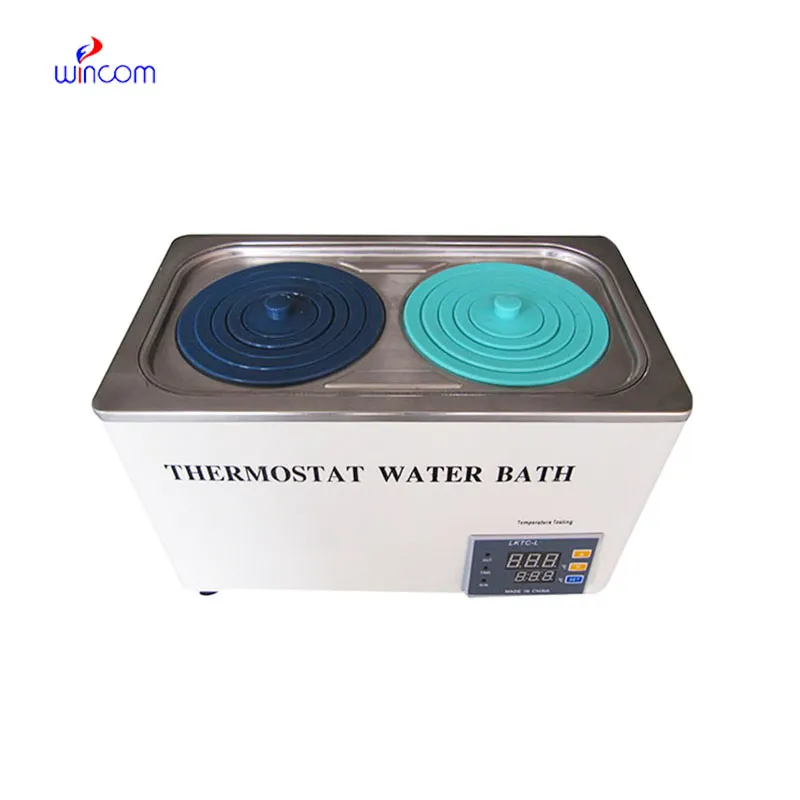
The temperature controlled water bath finds application wherever reproducible experimental findings are needed in controlled heating. In life science, it maintains enzymes and samples at specific temperatures during incubation. In small chemical labs, it is utilized to evaporate solvents, crystallize materials, and investigate the rate of reactions. School laboratories also employ the temperature controlled water bath in teaching vital laboratory concepts. Its even heat ensures that laboratory specimens are treated uniformly for higher accuracy in data. The temperature controlled water bath helps maintain consistency in research, enabling scientists to achieve stable conditions necessary for precise analysis.

The future for the temperature controlled water bath is more precision and more automation. Future models will incorporate improved digital control systems through the advancement in sensor technology, providing even more precise temperature performance. The temperature controlled water bath will be integrated into smart laboratory networks to permit remote monitoring and data logging through cloud-based systems. The temperature controlled water bath will also include eco-friendly materials and energy-saving heating systems. Though labs themselves are rapidly becoming more advanced, the future generation of the temperature controlled water bath will emphasize flexibility, end-user safety, and integration transparency with current research pipelines.

The temperature controlled water bath will perform optimally and endure with good maintenance. Check the water level constantly to avoid overheating and destruction of internal parts. Regular draining and chamber cleaning will avoid deposits or contamination. Use of distilled water avoids residue build-up. The exterior and control panel can be wiped using a soft, damp cloth. Regular inspection of heating elements and temperature sensors ensures efficient operation with accuracy. Store the temperature controlled water bath in a dry environment and it enhances its longevity.
A temperature controlled water bath is an easy way to have constant temperatures for a number of laboratory applications. It possesses a heating element and thermostat to maintain the water at a level chosen by the user. Scientists rely on the temperature controlled water bath for incubation, chemical reaction, and sample heating operations that require accurate temperature control. The gentle circulation of the water prevents hot spots and cold spots from occurring, providing uniform heat transfer. Constructed with a strong outer casing and safety mechanisms, the temperature controlled water bath is a workhorse for routine and specialized lab procedures.
Q: What makes a water bath important for laboratory precision? A: Its ability to maintain constant, uniform temperature conditions ensures reproducibility and accuracy in experimental results. Q: Can deionized water be used instead of distilled water? A: Yes, deionized water is also suitable, as it minimizes mineral deposits and supports cleaner operation. Q: How should a water bath be stored when not in use? A: Drain the tank completely, wipe it dry, and keep it covered in a clean, dust-free area to prevent corrosion and contamination. Q: What are common signs that a water bath requires maintenance? A: Slow heating, fluctuating temperatures, or visible residue in the tank indicate that cleaning or inspection is needed. Q: How can user safety be improved when using a water bath? A: Always use insulated gloves, avoid contact with hot water, and ensure the equipment is placed on a stable, dry surface during operation.
The hospital bed is well-designed and very practical. Patients find it comfortable, and nurses appreciate how simple it is to operate.
The centrifuge operates quietly and efficiently. It’s compact but surprisingly powerful, making it perfect for daily lab use.
To protect the privacy of our buyers, only public service email domains like Gmail, Yahoo, and MSN will be displayed. Additionally, only a limited portion of the inquiry content will be shown.
We are planning to upgrade our imaging department and would like more information on your mri machin...
We’re currently sourcing an ultrasound scanner for hospital use. Please send product specification...
E-mail: [email protected]
Tel: +86-731-84176622
+86-731-84136655
Address: Rm.1507,Xinsancheng Plaza. No.58, Renmin Road(E),Changsha,Hunan,China


 EN
EN
 af
af
 es
es
 ar
ar
 tr
tr
 sw
sw
 pt
pt
 th
th
 ur
ur
 bn
bn
 ne
ne
 vi
vi
 km
km
 lo
lo
 de
de
 ru
ru
 fi
fi
 nl
nl
 fa
fa
 fr
fr
 ko
ko