The laboratory water baths has functionality with advanced temperature control technology. Its heater system includes stable thermal consistency, whereby each sample in the chamber undergoes equal heat exposure. The laboratory water baths enables precise temperature setting and adjustments with an easy-to-use digital control panel. Its stainless-steel tank includes superior corrosion resistance and chemical reaction resistance. With built-in protection features such as thermal cut-off and water level sensing, the laboratory water baths is all about performance and protection. It is best for regular lab applications and for certain scientific applications.
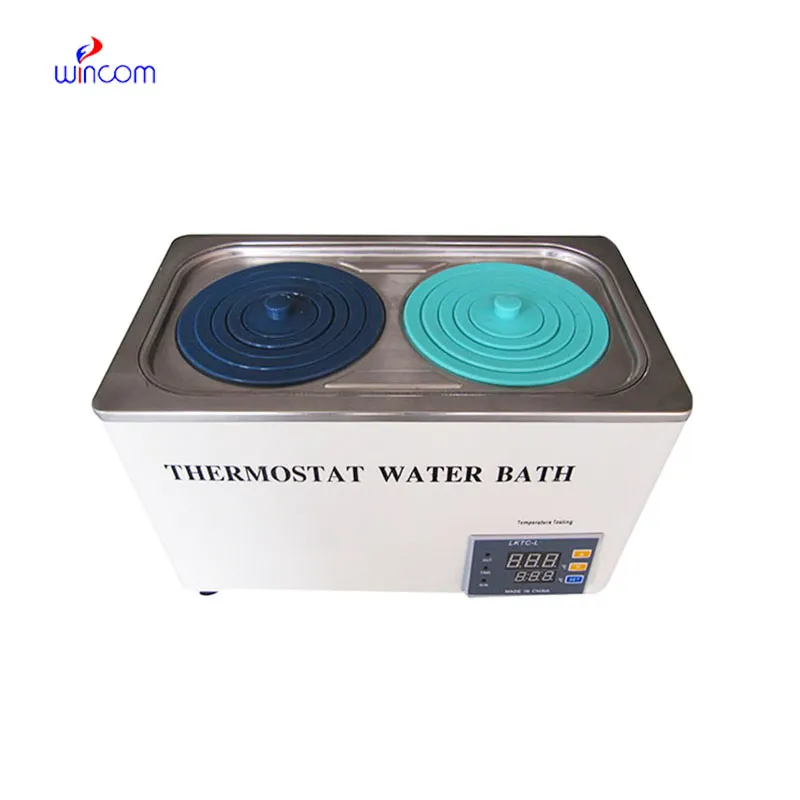
Both in commercial and school settings, the laboratory water baths provides stable heat for experiments that necessitate temperature-driven conditions. It is used in processes such as protein digestion, bacterial culture, and heating of reagents. The laboratory water baths is also crucial in environmental analysis where accuracy in temperature control of incubating samples is needed. The laboratory water baths' reliability supports laboratories in conducting standard experiments as well as complex research studies. The laboratory water baths' stable performance ensures reproducibility and reliability, boosting laboratory results' credibility across various fields.

The next generation of the laboratory water baths will combine the newest digital innovation with sustainable design. Better microprocessor systems will increase temperature accuracy, and integrated IoT capabilities will enable live monitoring and control via mobile or desktop interfaces. Next-generation models will be focused on energy conservation and user safety, with self-off and water level alerts becoming intelligent. The laboratory water baths will become a smart lab device, enhancing efficiency, accuracy, and adaptability in different research applications.

Monitoring of usage and regular cleaning are required to keep the laboratory water baths. The water must be replaced at intervals to prevent microbial growth and ensure purity. Drain and dry the tank thoroughly before prolonged periods of inactivity. Clean with soft sponge and non-corrosive cleaner in order to preserve the integrity of the metal chamber. Inspect thermostats and electrical elements for any deviation. Proper ventilation around the laboratory water baths also helps to provide proper temperature control. Prompt maintenance guarantees long-term reliability and stable performance.
The laboratory water baths is a device that is normally applied to heat samples gradually and uniformly under temperature regulation. The instrument is an essential part of laboratories for offering stable thermal conditions for reactions, culture media preparation, and activation of enzymes. Water circulating within the laboratory water baths facilitates the transfer of heat uniformly to prevent overheating. Most models come with digital readouts to allow for precise temperature measurement and simple adjustment. The laboratory water baths can accommodate a broad scope of scientific uses where precise control of temperature improves experimental accuracy and replicability.
Q: What makes a water bath important for laboratory precision? A: Its ability to maintain constant, uniform temperature conditions ensures reproducibility and accuracy in experimental results. Q: Can deionized water be used instead of distilled water? A: Yes, deionized water is also suitable, as it minimizes mineral deposits and supports cleaner operation. Q: How should a water bath be stored when not in use? A: Drain the tank completely, wipe it dry, and keep it covered in a clean, dust-free area to prevent corrosion and contamination. Q: What are common signs that a water bath requires maintenance? A: Slow heating, fluctuating temperatures, or visible residue in the tank indicate that cleaning or inspection is needed. Q: How can user safety be improved when using a water bath? A: Always use insulated gloves, avoid contact with hot water, and ensure the equipment is placed on a stable, dry surface during operation.
The water bath performs consistently and maintains a stable temperature even during long experiments. It’s reliable and easy to operate.
The centrifuge operates quietly and efficiently. It’s compact but surprisingly powerful, making it perfect for daily lab use.
To protect the privacy of our buyers, only public service email domains like Gmail, Yahoo, and MSN will be displayed. Additionally, only a limited portion of the inquiry content will be shown.
Hello, I’m interested in your water bath for laboratory applications. Can you confirm the temperat...
Hello, I’m interested in your centrifuge models for laboratory use. Could you please send me more ...
E-mail: [email protected]
Tel: +86-731-84176622
+86-731-84136655
Address: Rm.1507,Xinsancheng Plaza. No.58, Renmin Road(E),Changsha,Hunan,China


 EN
EN
 af
af
 es
es
 ar
ar
 tr
tr
 sw
sw
 pt
pt
 th
th
 ur
ur
 bn
bn
 ne
ne
 vi
vi
 km
km
 lo
lo
 de
de
 ru
ru
 fi
fi
 nl
nl
 fa
fa
 fr
fr
 ko
ko