In hospitals and medical research facilities, edta blood collection tubes have become a global standard for blood sampling and transport. The production of the tubes takes place under very stringent quality controls which guarantee sterility and chemical uniformity. They are employed by hospitals for a variety of diagnostic tests, such as screening for infectious diseases, performing hormone panels and routine blood counts. Their pre-filled additives allow for the prevention of clotting or degradation of components, thus maintaining the integrity of each sample. The communication with laboratory machines like centrifuges and analyzers makes the workflow smoother. The use of edta blood collection tubes in different medical areas not only minimizes the chances of mistakes but also improves the safety of patients and ultimately leads to the provision of accurate test results in both hospital and research environments.
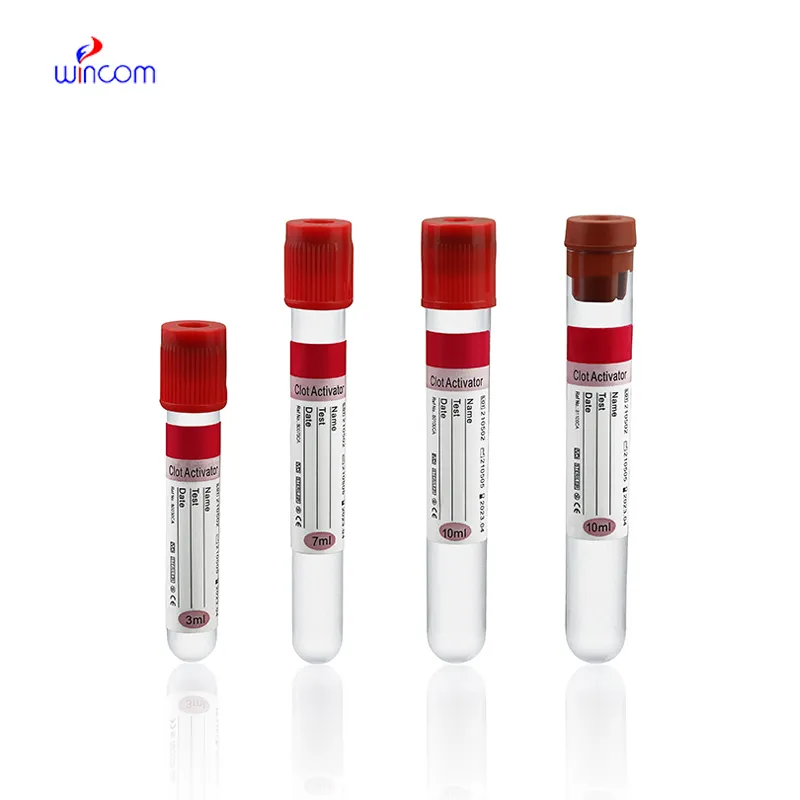
The use of edta blood collection tubes in emergency departments is vital for quickly taking blood samples in acute care situations. Immediate tests for coagulation, electrolytes, and blood gases are required for patients who have undergone trauma, are suffering from severe infections, or have heart problems. The use of color-coded caps allows the rapid selection of the right tube by the clinicians, while the vacuum-based designs allow for safe and efficient sample collection. Tubes are allowed to be directly transported to the hospital laboratories for prompt analysis. The edta blood collection tubes application guarantees that the essential blood samples would be unpolluted and well-preserved, hence, making the rapid diagnostic decision-making process that could save the lives of patients in the high-pressure hospital environments.
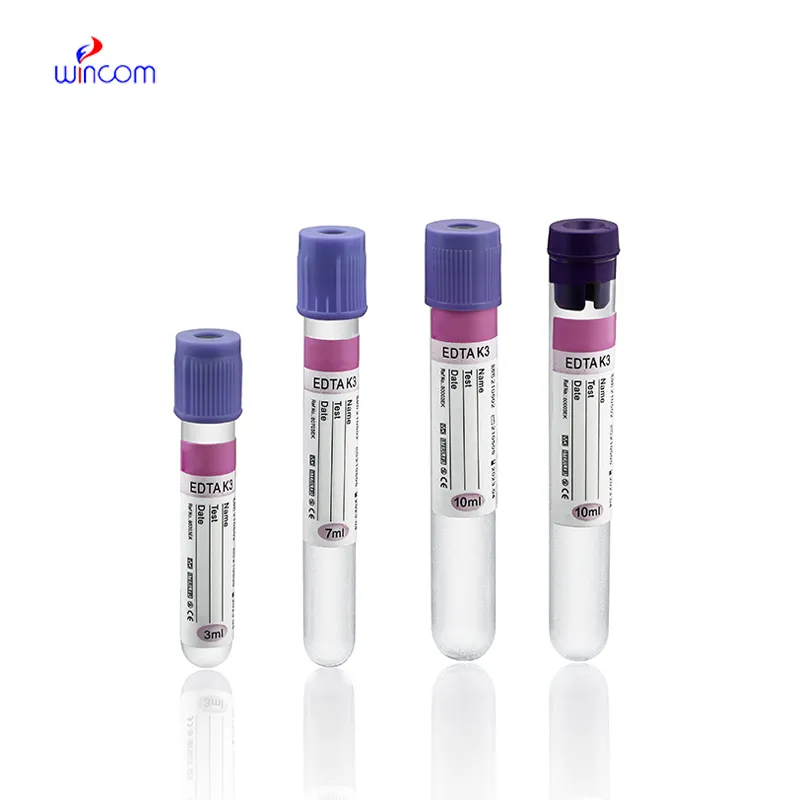
In hospitals, the sophisticated edta blood collection tubes might consist of immediate data transfer, which would make it possible for the laboratory information systems to observe the conditions of the collection and transportation of the samples remotely. The tubes could manage to deliver data regarding the temperature, shaking, and duration, thus maintaining the sample's integrity prior to analysis. The combination with automation will lead to a decrease in the handling and error rates. The next edta blood collection tubes will offer digital connectivity along with the use of superior materials and pre-measured additives, which will improve the communication between the laboratory and the physicians, the safety of the patients, and the reliability of the diagnosis. The hospitals will depend on the use of these tubes for the optimization of laboratory operations, the support of high-throughput testing, and the delivery of clinical results that are traceable and reproducible.

The care standards for edta blood collection tubes prioritize sterility and environmental safety. The tubes should be stored in the original packaging until they are needed for the patient. The laboratory should have clean air supply to minimize the risk of contamination. Refreshers for the staff are done regularly to make sure everyone knows how to handle and dispose of materials correctly. Hospitals can have different storage places for tube types to reduce the possibility of mix-ups. Adhering to these maintenance guidelines, healthcare facilities are able to deliver the same quality of tubes, secure the patients' safety, and keep the laboratory diagnostics at a high level.
In outpatient clinics, edta blood collection tubes are used to take blood samples for laboratory tests that are performed routinely, including cholesterol levels, glucose monitoring, and hormone panels, among others. The tubes' pre-measured additives help to get uniform results and at the same time, lessen the handling errors. Clinic employees are relying on the performance of these tubes as being dependable for both short-term and long-term patient monitoring. The correct application of edta blood collection tubes keeps each sample intact while being transported to hospital laboratories. Their ease of use, uniformity, and compatibility with laboratory analyzers come together to make them an essential tool in everyday clinical practice and patient diagnostics.
Q: In what way Blood Collection Tubes act as a barrier against infections? A: The use of sterile materials for production and the one-use-only principle combined make possible the reduction of the risk of contamination. Q: Are Blood Collection Tubes only for use in research laboratories? A: Indeed, they find substantial application in clinical research and diagnostics. Q: What kind of materials are Blood Collection Tubes made of? A: Generally, the materials can be either medical-grade plastic or glass. Q: What is the procedure to dispose of Blood Collection Tubes after the usage? A: These tubes should be treated as contaminated medical waste and disposed of in accordance with the hospital's regulations. Q: What is the Importance of Blood Collection Tubes labeling? A: The proper labeling ensures the proper patient identification and accuracy of lab processing.
The centrifuge operates quietly and efficiently. It’s compact but surprisingly powerful, making it perfect for daily lab use.
The delivery bed is well-designed and reliable. Our staff finds it simple to operate, and patients feel comfortable using it.
To protect the privacy of our buyers, only public service email domains like Gmail, Yahoo, and MSN will be displayed. Additionally, only a limited portion of the inquiry content will be shown.
Could you please provide more information about your microscope range? I’d like to know the magnif...
We are planning to upgrade our imaging department and would like more information on your mri machin...
E-mail: [email protected]
Tel: +86-731-84176622
+86-731-84136655
Address: Rm.1507,Xinsancheng Plaza. No.58, Renmin Road(E),Changsha,Hunan,China


 EN
EN
 af
af
 es
es
 ar
ar
 tr
tr
 sw
sw
 pt
pt
 th
th
 ur
ur
 bn
bn
 ne
ne
 vi
vi
 km
km
 lo
lo
 de
de
 ru
ru
 fi
fi
 nl
nl
 fa
fa
 fr
fr
 ko
ko